

The Living Dark Reader, No. 2
A quarterly companion for deep reading. In this issue: the autumn longing, selfhood, language, and the hidden life of experience.
Dear Living Dark reader,
The second issue of The Living Dark Reader is here. If you’ve noticed my absence from your inbox over the past month, this is why: I’ve been working steadily on this new issue.
As with the first issue, this is my quarterly PDF journal of essays, reflections, and fragments, gathered and shaped for slower reading away from the restless currents of the live online world. It accompanies this newsletter, but it represents my small attempt to offer a different kind of experience, one that’s quieter, more stable, more page-like, and better suited for sustained attention than an internet-based publication. That experience extends to my side of the project as well. In the spirit of the whole thing, I have thoroughly enjoyed this extended period of deep writing, reading, and editing.
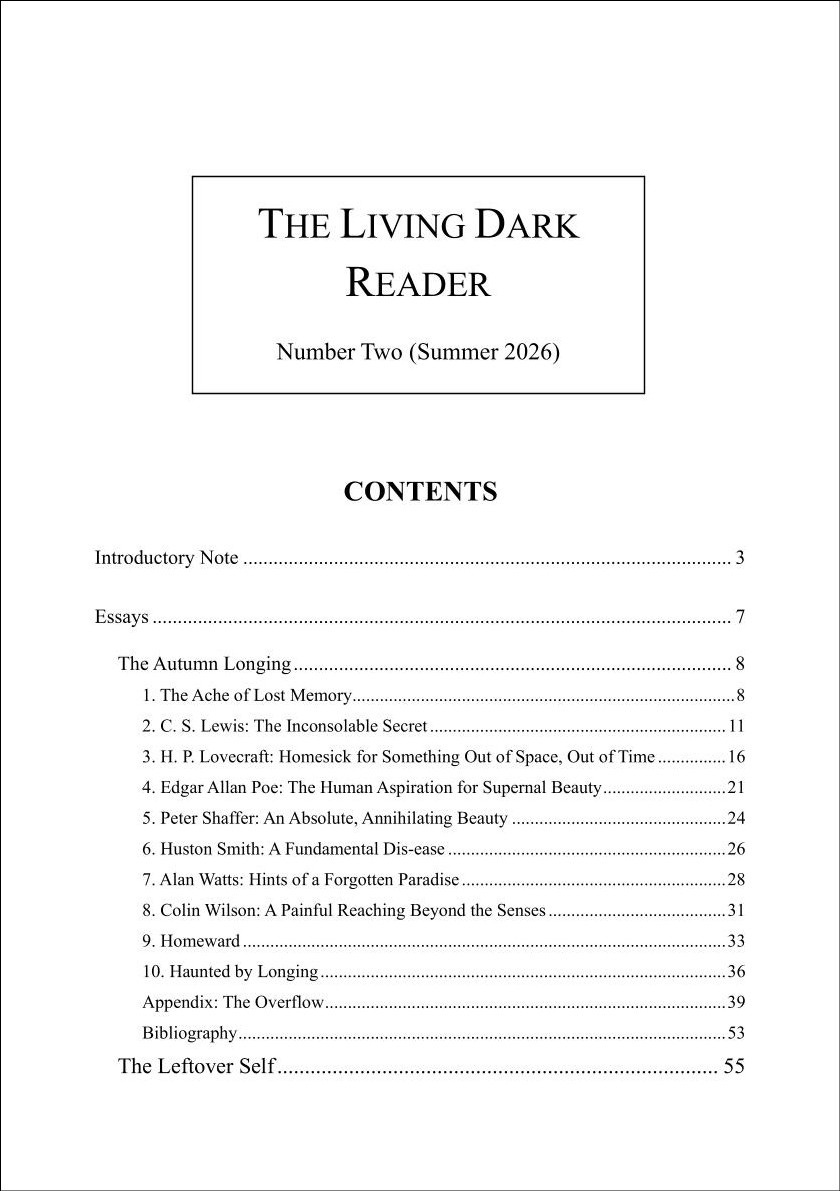
This new issue gathers several pieces of writing that explore a common territory from different angles and perspectives. One is about the strange longing that has haunted me since adolescence. Others consider the nature of selfhood, the stories we mistake for reality, anomalous experience and the limits of reductionist explanation, and the alchemical power of language and writing in the age of artificial intelligence. The issue concludes with a new section of fragments and reflections.
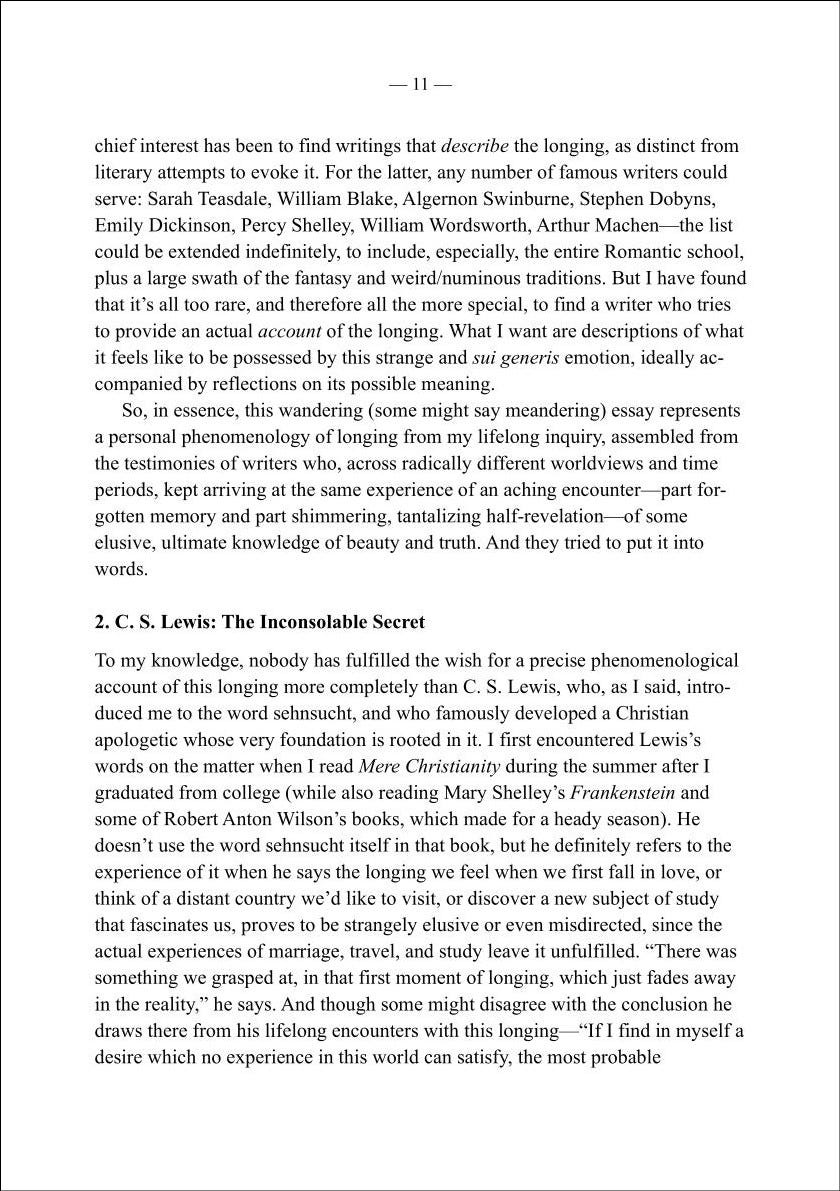
The anchor essay is “The Autumn Longing,” a piece that has been almost two decades in the making. It began in fragments years ago at my old blog The Teeming Brain, drew in material from later essays and notes, and eventually became something like a personal phenomenology of transcendental desire, representing an attempt to describe a particular experience of intense, ethereal longing that I first became aware of in childhood and later recognized in the writings of C. S. Lewis, H. P. Lovecraft, Edgar Allan Poe, Peter Shaffer, Huston Smith, Alan Watts, Colin Wilson, and others.
Here’s an excerpt from its opening movement:
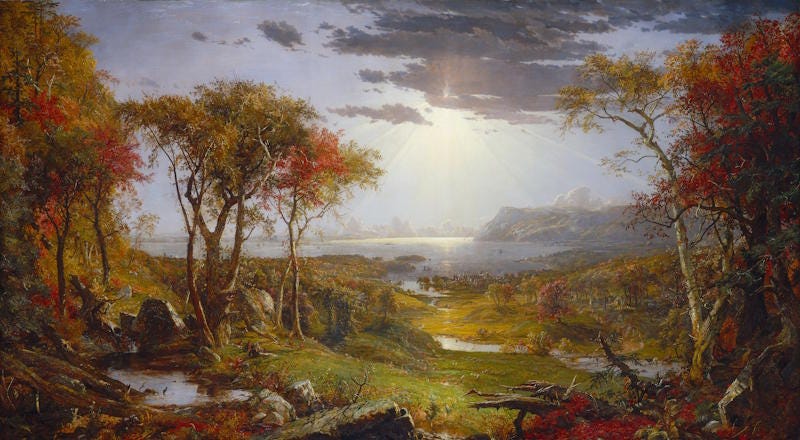
The autumn season has always carried a special emotional potency for me. When the weather turns crisp and the colors of nature change first to vibrant reds, oranges, and golds, and then progress onward toward deep russet browns, tending toward the death-sleep of winter, I’m struck with feelings of poignancy and melancholy that burn more brightly, or perhaps more darkly, than at any other time of the year. I’m also more exquisitely sensitive to the aesthetic influence of art, whether literary, musical, visual, or otherwise.
It was many years ago that I first realized and articulated to myself that this autumnal mood is inextricably bound up with a certain, strange longing. When the mood of autumn comes over me, it’s always characterized by a kind of nostalgia for something I have never really known, as if I possess some vestigial memory of a lost knowledge or emotion that flits maddeningly and elusively on the edge of my ability to remember. It’s truly a numinous experience, one that makes me feel as if I’ve come into brief contact with some sort of transcendent spiritual truth. It tends to generate the impression of an absolute, unmediated experience of supernal beauty hovering just beyond the edge of my inner grasp.
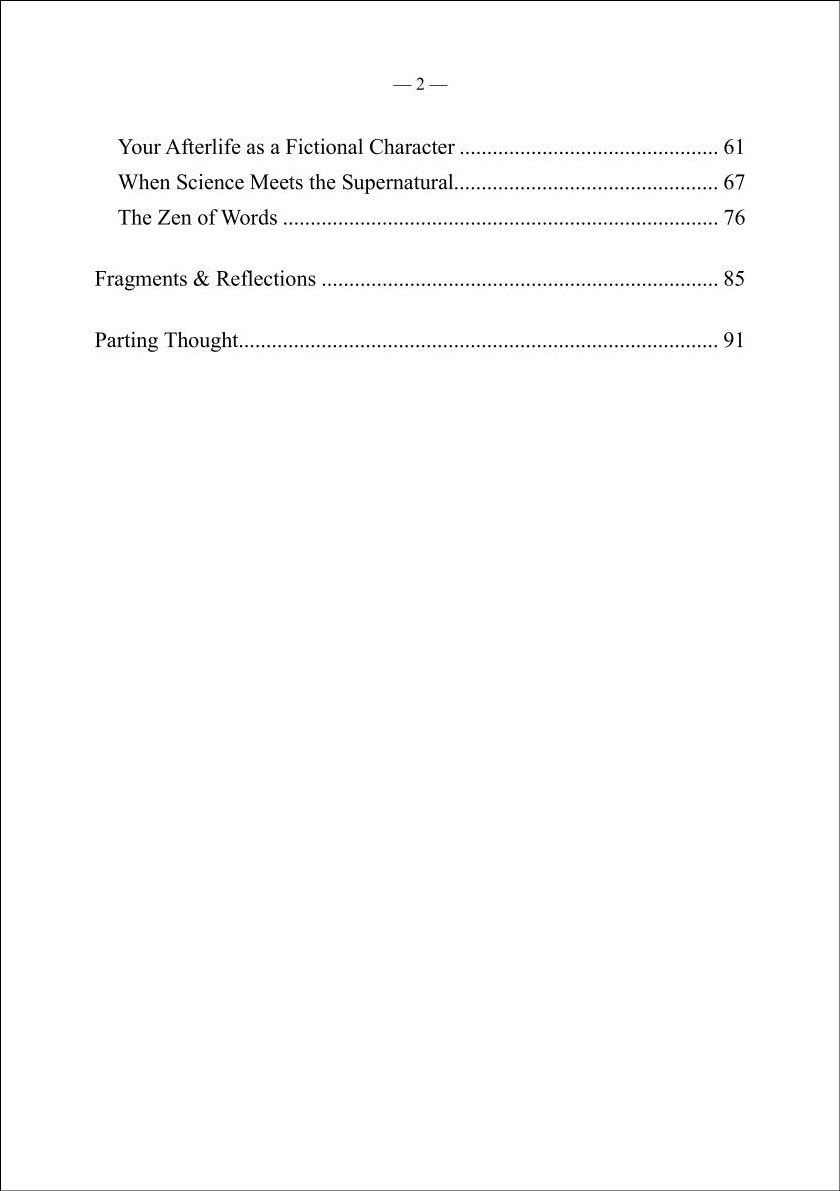
The essays that follow take up adjacent and overlapping themes. “The Leftover Self” reflects on Walker Percy, philosophical instability, and the self that remains after every theory fails to contain it. “Your Afterlife as a Fictional Character” uses the metaphor of novels and movies to ask what survives every story, including the story of one’s own life. “When Science Meets the Supernatural” begins with sleep paralysis and proceeds to consider experience, explanation, and the assumptions that govern our maps of reality. And “The Zen of Words” returns to the power of language itself, asking what writing does for the soul in an age when artificial intelligence can now produce text on command.
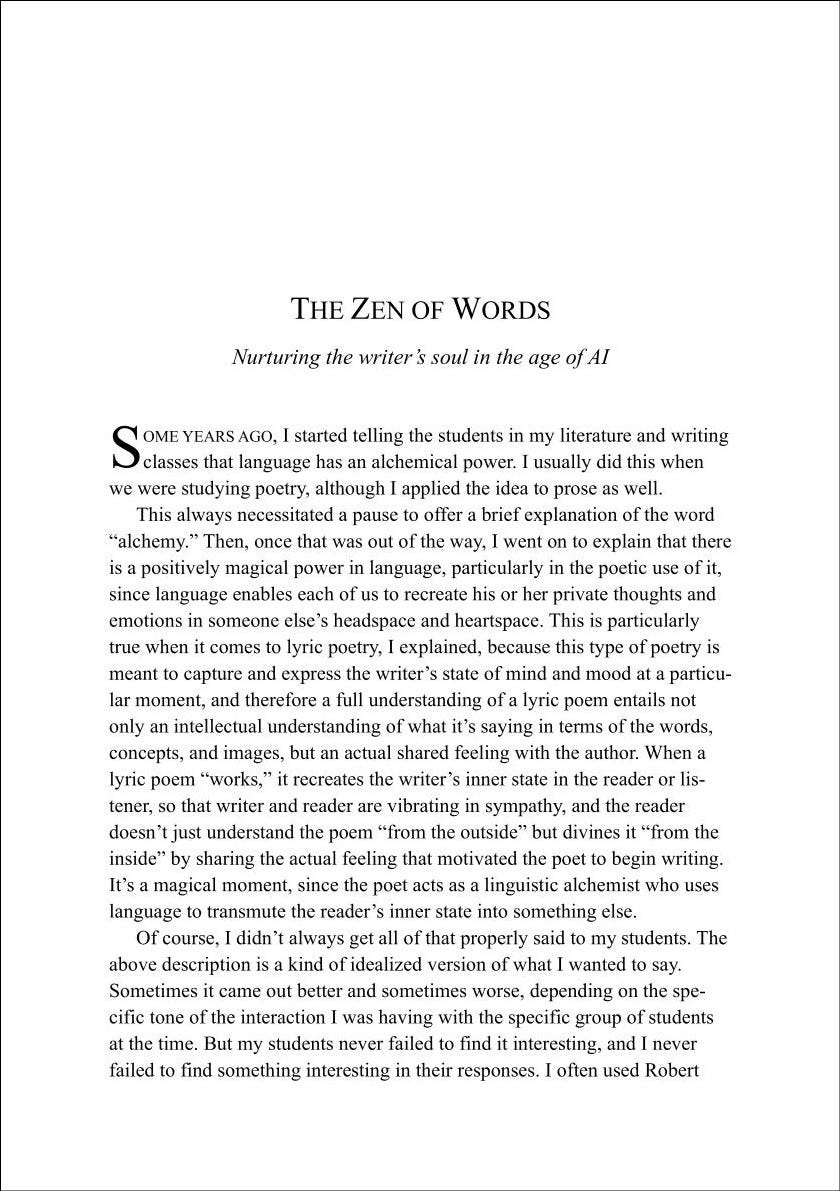
The issue closes with a new collection of “Fragments & Reflections.” These encompass shorter observations on writing, the daemon muse, weirdness, nonduality, digital life, solitude, creativity, and the strange ways in which private experience can sometimes open onto something universal.
Paid subscribers will find the download link for The Living Dark Reader, no. 2, below my signature. If you’re already a paid subscriber, thank you sincerely for helping to make this work possible. If you’re not, and you’d like to read the issue, I invite you to subscribe and know that I deeply appreciate the support.
However you arrived here, I’m glad you did. Thank you for reading.
Warm regards,

