

At the end of “Can a Serious Writer Use AI Without Losing His Soul?,” I mentioned that I was beginning to explore its questions more fully through a larger project called The Self-Determined Writer. That project is now taking shape, and its first publication will be The Serious Writer’s Guide to Using AI Without Losing Your Soul.
I’ll have more to say about this guide in time. For now, here is a brief passage from the work in progress, concerning one of the things that AI’s promise of instant production may tempt us all to forget: that the appearance of inactivity on the surface may sometimes be an essential part of the creative process.
The Fallow Period
In A Course in Demonic Creativity, I wrote about the classic stages of the creative process: preparation, incubation, illumination, and verification. Preparation and verification involve conscious work, but incubation and illumination elude our control. They don’t submit to direct command. During incubation, the project sinks into the unconscious mind, and nothing much may appear to be happening on the surface. You may feel stalled, empty, or becalmed. But this is when the deeper mind is working on the material in its own way and time.
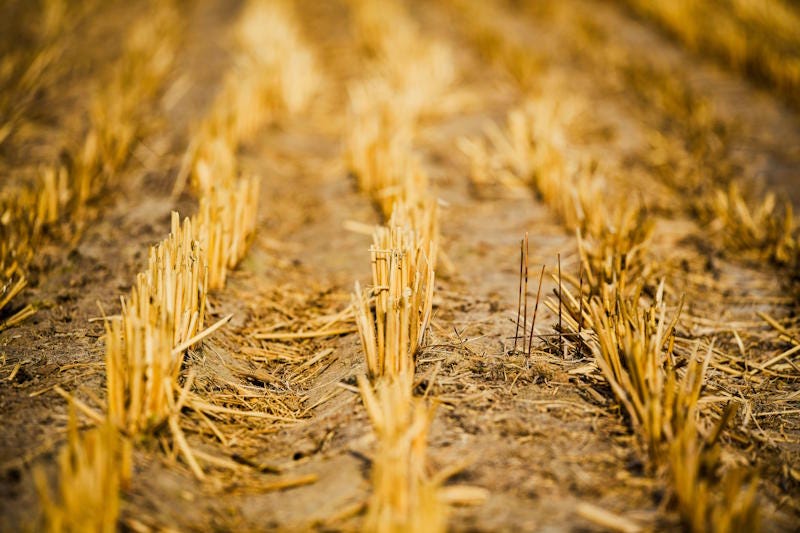
The old agricultural metaphor of the fallow field is apt. A field lying fallow looks barren, but it’s actually being replenished. Its apparent inactivity is part of its fertility. To force production from it too soon would be counterproductive and even damaging.
Victoria Nelson makes this point beautifully in On Writer’s Block, a book that I can’t recommend highly enough. Discussing the poet Philip Larkin’s slow, sparse output, Nelson observes that blaming oneself for low productivity can amount to punishment for a crime that didn’t exist until it was named. Uneven output, she observes, may be a natural condition of creativity, with silence and writing belonging to an instinctive alternation of states.
This is exactly the kind of wisdom AI tempts us to forget. The machine makes constant output seem not only possible but normal. If it can generate an outline or twenty options, why sit with the discomfort of having none? If it can fill the blank page instantly, why honor the blankness as an open field of possibility that may, in time, reveal what it wants to show?
Sometimes we should honor the blankness because it may not be an empty, useless nothing. It may be what’s incubating our writing.
Not All Silence Is Holy
At the same time, we need to be careful. It would be a mistake to turn every block into a message from the muse and every delay into a sacred fallow period. Some silence is fruitful, while other silence may be due to fear, exhaustion, perfectionism, or avoidance. Some may simply result from bad sleep, a broken schedule, or too much email.
In Writing at the Wellspring, I explored the strange attraction of silence, stillness, and giving everything up for a time, including your writing. Sometimes the call to stop working may be valid. It may be the well recharging, the feeling of your soul saying, “Enough. Be still.” But other times the same impulse may be self-defeat in spiritual clothing. What looks like surrender may actually be capitulation: giving up your work while continuing to simmer in grief, resentment, and self-recrimination.
You cannot assume in advance which is which. That’s why “Am I stuck?” is not the best question. A better one is: “What kind of stuckness is this?” AI is dangerous when it gives the same answer to every experience of stuckness: Generate more text. It treats silence as something to be filled and difficulty as a bug to be fixed. But your task as a writer is to figure out what the difficulty is asking you.
More on the wisdom of silence and waiting:
The inner work of the creative life:

PRAISE:
“[An] intimate journey into the mystery of creativity and spirit… Cardin weaves practical methods, personal stories, literary references, and mystical insights into a lyrical meditation on what it means to create from the depths of the soul… both deeply personal and universally resonant.” — BookLife review (Publishers Weekly)
“A guide for writers who welcome the dark and hunger for meaning. — Joanna Penn, author of Writing the Shadow
“I can’t think of any [other books] that link the creative act so uniquely or persuasively with spirituality.” — Victoria Nelson, author of On Writer’s Block and The Secret Life of Puppets
“A meditation on the silence and darkness out of which all creative acts emerge....A guide for writers unlike any other.” — J. F. Martel, author of Reclaiming Art in the Age of Artifice and co-host of Weird Studies
“Important to any writer ready to see through the self illusion and realize the freedom this brings to any creative work.” — Katrijn van Oudheusden, author of Seeing No Self
READER REACTIONS:
“It easily earns its place on my shelf of texts that have challenged and changed how I think about writing and the creative life.”
“One of those magical texts that voices the Truth I secretly always knew.”
“What I’m thoroughly enjoying is the way Matt Cardin weaves those deep, existential questions in and out of the practical, grounded realities of writing itself … This is a book that doesn’t just talk about creativity; it inhabits it.”
“Matt has put into words things that have been alive in me for a long time, but which I have never articulated myself.”
“There is potential here to change your life … Cardin’s writing stirred something dormant in me.”
“This is definitely more than a self-help book on creativity. Matt Cardin’s range of scholarship, casual reading, philosophical spelunking and theological scholarship here forms into one single vision … If Colin Wilson and Krishnamurti and ST Joshi had written a tome on the essentials of creativity, it would be something like this.”
“It was incredible finding an author able to describe how to unlock the skills I’ve been working on even further.”
“This book is by far the best book I have read on creativity. I hope it will reach many people and help them freed from creative block, procrastination, paralyzing self-doubt, and perfectionism.”
“This isn’t a how-to book about writing. It’s a book about why writing matters, and what it’s actually touching when it’s real.”