

Dear Living Dark reader,
Here’s a suggestion for readers of books and other writings on creativity, self-help, spirituality, and other such things, given to you by a person (me) who finds such things to be just as interesting and attractive as you do:
Read such books avidly, even recklessly. Let yourself get thoroughly drunk on whatever sense of enjoyment or illumination they may generate. But don’t do any of the recommended exercises. Later, after a few days, weeks, or years, you may find yourself doing something specific—maybe writing down a personal life inventory, or conducting a visualization or personal reflection, or engaging in a specific meditation, or pursuing a thought experiment, or doing some other form of inner/outer exercise—and you’re going at it with the sense that you thought of it yourself, that it just welled up as a moment of organic insight and action, propelled by an energy of rightness. And precisely because of that self-driven sense, it proves deeply effective in clarifying things for you. And then suddenly you’ll remember with a shock, “Wait—this is from that book I read a long time ago!”
In my engagement with such literature over the years (decades), I have found that following other people’s prescribed exercises can feel too stilted and artificial to let them be effective. A kind of residue or barrier of self-consciousness always accompanies such action. Even if I really grok and groove with a writer’s ideas and worldview, even if I’m excited about a book and the doors it’s unlocking in my self-understanding, I find that actually trying to do any prescribed exercises feels mechanical, awkward, and even counterproductive.
I first discovered this when reading Robert Anton Wilson’s Prometheus Rising and Quantum Psychology in my late teens and early twenties. Both books excited the hell out of me, and both were filled with practical exercises, which I dutifully tried to execute. The results were frustrating. It was as if the energy that I sensed in them, and that filled me with a sense of exhilaration, came from the fact that they embodied RAW’s personal, vivid, hard-won insight, which he had then expressed and shared in the form of recommended actions that were better taken as descriptive instead of prescriptive, as expressions of his insight that just happened to be dressed up as means of gaining the insight for myself. The veneer of “how to” was actually misdirecting, at least for me. I was better off enjoying Bob’s description of the exercises for their own sake. (This, despite his repeated assertions that it was vitally important to actually carry them out.)
I eventually realized this same phenomenon was at work across the entire field of consciousness change, spiritual awakening, self-development, and creative unfolding. I found that whenever I was excited by a book of this kind, the best approach was just to let my psyche absorb the writer’s perspective and then concoct and devise, however slowly, its own self-motivated version of any specific action to take based on it. This action might then emerge from the soil of my life organically, feeling like deeply aligned wisdom in motion. At this point I can’t tell you how many times I have gone to the page and written down some self-revelatory or self-clarifying thing, or conducted some kind of thought experiment, or done some kind of self-inquiry, or otherwise undertaken something that might reasonably be classified as an “exercise,” and have felt it come up with a powerful sense of rightness, as if it were arriving naturally in a moment of inner and outer alignment—and then recognized it as the flowering of a seed that was planted in me years earlier by a book whose prescriptive advice I had deliberately refrained from acting on.
If we want to enlarge the frame, we might relate this to things like David Steindl-Rast’s classic (in my opinion) essay “The Mystical Core of Organized Religion,” where Steindl-Rast asserts that “every religion has its mystical core,” its ancient origin and present living base in a vivid, firsthand experience of realizing reality, and that “the challenge is to find access to it and to live in its power.” This is specifically a challenge because the very means that each religion has devised for accessing that living core can become the primary obstacle. To quote Steindl-Rast’s incisive words:
As long as all goes well with a religion, then doctrine, ethics, and ritual work like an irrigation system, bringing ever fresh water from the source of mysticism into daily life. . . . Time has an influence on the system: the pipes tend to get rusty and start to leak, or they get clogged up. The flow from the source slows down to a trickle.
Fortunately, I have not yet come across a religion where the system didn’t work at all. Unfortunately, however, deterioration begins on the day the system is installed. At first, doctrine is simply the interpretation of mystical reality; it flows from it and leads back to it. But then the intellect begins to interpret that interpretation. Commentaries on commentaries are piled on top of the original doctrine. With every new interpretation of the previous one, we move farther away from the experiential source. Live doctrine fossilizes into dogmatism.1
Similarly, we could invoke Peter Brown’s criticism—a bit more spicily expressed—of Buddhism with its rigid, doctrinaire set of practices:
Watch out for those Buddhist teachers, expert at creating bondage out of the quest for what you already are. . . .
[Much of Buddhist teaching] is just more promulgation of deluding complications (as is 99.999999 etc.% of all human communication, teachings, books, etc.). That stuff pisses me off too if I bother to read it for any length of time, at this point I can tell immediately if it’s the rare communication of liberating clarity or the usual deluded bullshit and I close the book and move on.2
For both Brown and Steindl-Rast, the point about organized religion parallels the point I’m making here about exercises for enhancing your creativity, deepening spiritual insight, or otherwise trying to gain something for your life. The supposed means can obscure the end. They can become the cart interposing itself before the horse, the pointing finger that distracts from the beautiful moon, a quagmire of self-generated effort that locks you in an endless round of frustration that deludes you into thinking you’re “making progress.”
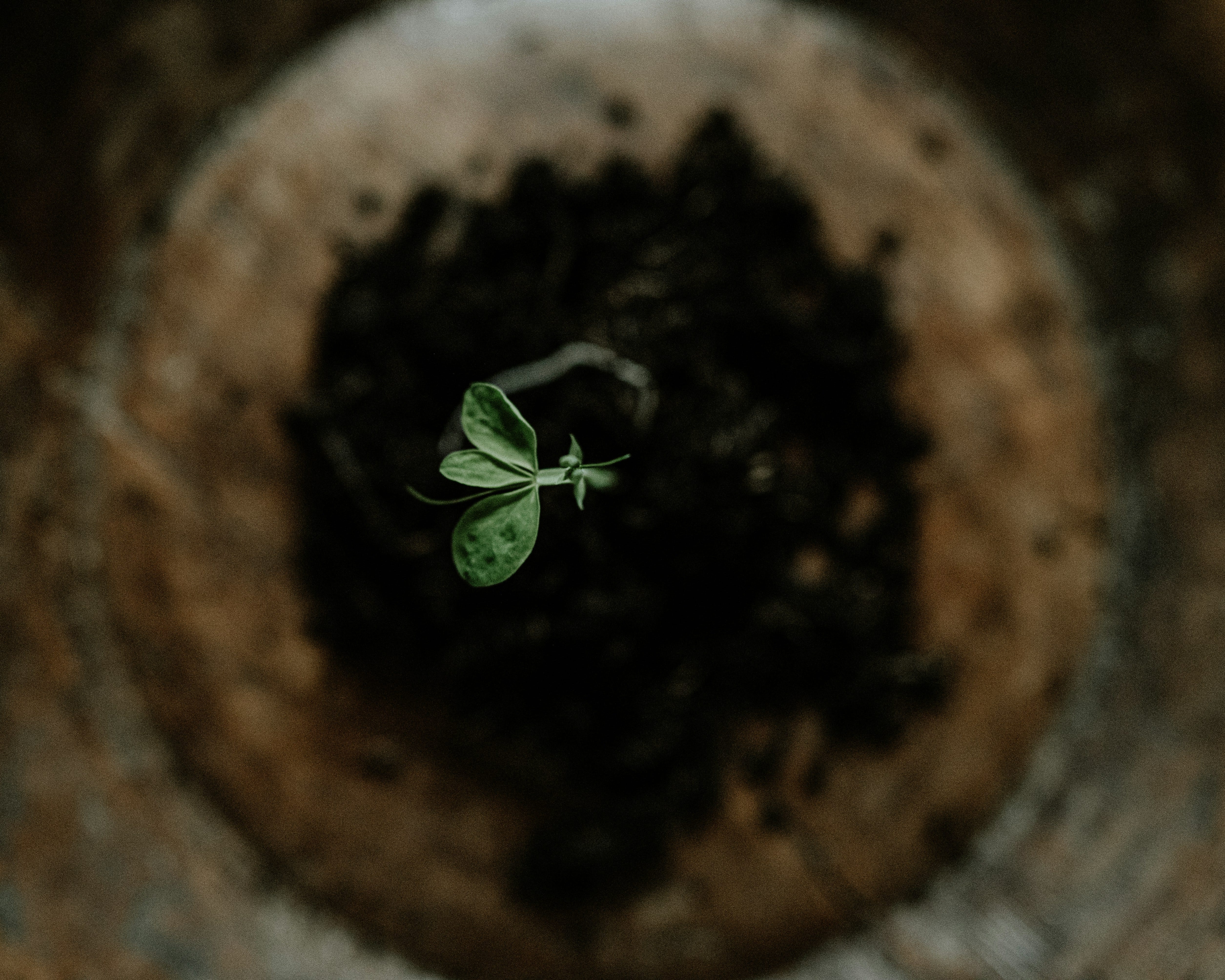
I hope it goes without saying that when I recommend ignoring and, in effect, sublimating any practical exercises that you come across in books on spirituality or self-help, I mean this to encompass my own books, too, as well as anything that I write in this newsletter. Both A Course in Demonic Creativity and Writing at the Wellspring contain suggested exercises (the former more than the latter) for discovering and working with your creative energy and destiny—with your muse, daemon, or inner genius. Don’t rush to execute these. Instead, let them compost. Let them sink into the soil of your life. They will be far more helpful if you simply let their outlook settle into you and then pay attention to how, if at all, this moves you to respond later. After you’ve forgotten all about them, what actions may arise within you and from you that are natural, flowing, and deeply your own?
Warm regards,

P.S. A couple of the links here are affiliate links for Amazon or Bookshop.org, so I’ll earn a commission if you click through them and make a purchase.
If you enjoyed this post, please consider sharing it with a friend.
Support This Work
If you want to materially support The Living Dark, you can make a one-time donation or choose a recurring monthly donation. I spend a lot of time tending this project, so I sincerely thank you for even considering it. All posts will always remain free.
Published in December:

“[An] intimate journey into the mystery of creativity and spirit… Cardin weaves practical methods, personal stories, literary references, and mystical insights into a lyrical meditation on what it means to create from the depths of the soul… both deeply personal and universally resonant.”
— BookLife review (Publishers Weekly)
“A guide for writers who welcome the dark and hunger for meaning.
— Joanna Penn, author of Writing the Shadow
“I can’t think of any [other books] that link the creative act so uniquely or persuasively with spirituality.”
— Victoria Nelson, author of On Writer’s Block and The Secret Life of Puppets
“A meditation on the silence and darkness out of which all creative acts emerge....A guide for writers unlike any other.”
— J. F. Martel, author of Reclaiming Art in the Age of Artifice and co-host of Weird Studies
“Important to any writer ready to see through the self illusion and realize the freedom this brings to any creative work.”
— Katrijn van Oudheusden, author of Seeing No Self
David Steindl-Rast, “The Mystical Core of Organized Religion,” Grateful Living, undated (originally published in New Realities 10, no. 4 (March/April 1990).
Peter Brown in Stanton Hunter, The Astounding Nature of Experience: Conversations with Peter Brown (2014), 202, 203.
I spent many years experimenting with various systems of Magic, finally stopping with Austin Osmond Spare's - chaos magic, where it dawned on me that my own "system" was tapping it's fingers impatiently awaiting the time I'd get back to my own expression.
Thanks, Matt - always love your work !
I love this. There are similarities here to the way artistic influences work as well. I find that there's very little point in trying to imitate the work of musicians or writers that I admire when if I leave it long enough I'll end up imitating them anyway!